Review: Ice Cream Cart with Shade Applique Design
When I first pulled up the preview for the Ice Cream Cart with Shade Applique, my immediate reaction wasn't just about the cuteness factor, though it is undeniably charming. As a designer who spends hours staring at stitch maps and density plots, I was looking for structural integrity. Does this applique design hold up under the tension of a hoop? Will the satin edges fray after a few washes? This isn't just a digital file; it's a blueprint for a physical handmade product that needs to survive real-world use. The vibe here is pure nostalgia—think boardwalk summers and vintage treats—which makes it a powerful asset for anyone building a brand around joy, childhood, or summer-themed Dessert motifs.
First Impressions and Structural Layout
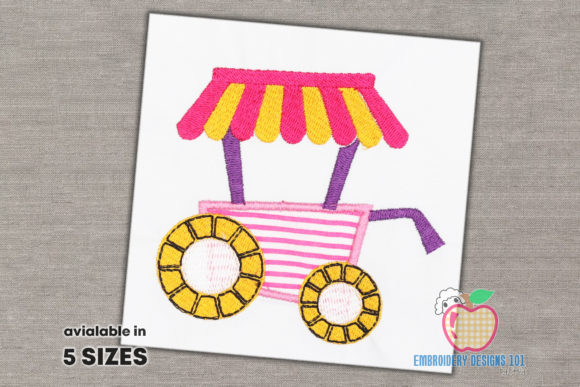
The layout of this design feels balanced. The cart structure provides a solid geometric base, while the shade introduces necessary curves that break up the rigidity. In Embroidery, straight lines are easy, but curved applique edges are where many designs fail. From what I can see in the product imagery, the transition between the fabric layers and the stitching looks smooth. The inclusion of a PDF worksheet detailing step-by-step color changes is a massive plus. It tells me the creator understands the workflow of a machine operator. We don't want to guess when to stop for a trim or a fabric placement; we want a clear roadmap. This level of documentation suggests the machine embroidery design was digitized with the user's time in mind, not just the visual output.
Real-World Application: The Summer Tote Scenario
Let's talk about where this actually shines. I recently had a client request custom bags for a local ice cream shop's grand opening. They wanted something that felt boutique, not like a cheap promotional giveaway. The Ice Cream Cart with Shade Applique fits this tote bag design brief perfectly. Because it is an applique, it adds texture and dimension that flat stitching simply cannot achieve. On a canvas tote, the fabric layers of the cart and the umbrella create a tactile experience for the customer. It elevates the perceived value of the item immediately.
Imagine this same design on a children's sweatshirt embroidery project. The softness of the applique fabric against the fleece backing of a sweatshirt is ideal for baby embroidery or toddler wear. Unlike dense fill stitches which can feel stiff and scratchy against sensitive skin, the fabric layers in an applique remain soft. For an Etsy seller or a small shop owner, this versatility is gold. You can market this as a "Summer Collection" across multiple product lines without needing five different designs.
Navigating Technical Challenges
However, enthusiasm must be tempered with technical caution. Applique designs demand precision. Before committing to a final finished product, you must test the design on scrap fabric that matches your final material. If you are stitching this on a textured fabric like a waffle knit or a heavy denim, the stitch density of the tack-down stitches needs to be sufficient to hold the applique piece flat without puckering.
There are specific scenarios where you need to proceed carefully. If you plan to use this on a cap, remember that curved surfaces distort designs. The shade of the cart might look perfect on a flat plane but could appear warped on the front panel of a baseball cap. Similarly, if you are working with stretchy fabrics like jersey knits for t-shirts, your choice of stabilizer is critical. A cut-away stabilizer is likely non-negotiable here to prevent the design from shifting or the fabric from gathering over time. Dark fabrics also require attention; ensure the thread colors specified in the worksheet provide enough contrast against the background fabric, or be prepared to manually adjust the thread chart to maintain visibility.
Commercial Viability and Brand Consistency
For those running a craft business, consistency is key to building trust. The Ice Cream Cart with Shade Applique offers a professional look that enhances brand recognition. When a customer sees clean satin edges and precise fabric placement, they associate that quality with your brand. This design works exceptionally well for commercial embroidery projects where volume and speed matter, provided your machine is threaded correctly and your hooping is tight. The detailed worksheet helps minimize errors during production runs, ensuring every small shop product looks identical to the last.
Furthermore, this design serves as an excellent asset for creating printable mockups. Even before you stitch a single thread, the visual appeal of the cart allows you to create compelling digital previews for your online store. This helps gauge customer interest and can drive pre-orders for holiday embroidery gifts or summer boutique items. Whether it's a personalized gift for a new baby or a branded apron for a bakery, the thematic flexibility is high.
Final Designer Notes and Best Practices
Before you launch into production, here is my practical checklist for using this digital embroidery file:
- Verify Hoop Size: Check the product image for exact dimensions. Ensure your hoop can accommodate the largest size offered without crowding the edges.
- Fabric Testing: Always stitch a sample on the actual fabric you intend to sell. What works on cotton might fail on polyester blends.
- Thread Contrast: Review the suggested thread colors. If your client wants a monochromatic look, ensure the tonal differences are strong enough to define the shape.
- Stabilizer Selection: Match your stabilizer to the fabric weight. Heavy fabrics need less support; light fabrics need more.
- Licensing Check: Confirm the license terms. Can you sell the finished product? Can you sell the digital file? Never assume; always read the specific terms provided with the download.
- Detail Inspection: Look closely at the tiny details in the preview. Are there small text elements or intricate corners that might get lost if scaled down too far?
The Ice Cream Cart with Shade Applique is more than just a cute picture; it is a functional tool for creators. When handled with the right materials and technical knowledge, it transforms simple textiles into cherished keepsakes. It bridges the gap between a hobbyist's passion and a professional's portfolio, offering a reliable path to creating high-quality, marketable goods. Just remember, the magic isn't only in the design file—it's in the execution.