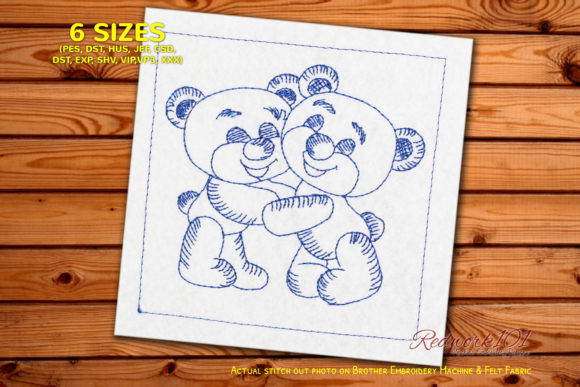
Teddy Bear Hugs Bluework: A Designer's Review for Valentine Projects
As someone who spends more time at the hoop than away from it, I approach every new machine embroidery design with a mix of excitement and skepticism. We've all downloaded files that looked perfect on the screen but turned into a bird's nest of thread on the fabric. That is why I took a close look at Teddy Bear Hugs Bluework before committing it to any client work or personal embroidery project. This isn't just about whether it looks cute; it is about whether it holds up under the needle and delivers value to the end user.
The first thing that strikes me about this design is its mood. It captures that specific, tender feeling associated with Valentine S Day without being overly saccharine or cluttered. The "Bluework" aspect suggests a reliance on tonal variations rather than a rainbow of colors, which is a smart move for modern aesthetics. In my experience, monochromatic or limited-palette designs often age better and look more sophisticated on custom apparel than busy, multi-colored graphics. The layout feels balanced, with a visual personality that says "comfort" and "affection," making it an ideal candidate for gifts meant to evoke warmth.
Real-World Application: The Tote Bag Test
To truly evaluate Teddy Bear Hugs Bluework, I imagined a specific real-life scenario: creating a limited run of tote bags for a local boutique's February promotion. Tote bags are tricky; they often use canvas or heavy cotton blends that can be unforgiving if the stitch density is too high or the underlay is insufficient.
If I were stitching this onto a natural canvas tote, the blue tones would pop beautifully against the neutral background. The design's structure seems robust enough to handle the texture of the fabric without getting lost. For a small shop product like this, presentation is everything. A clean, well-defined stitch-out tells the customer that the item is high-quality and worth the price tag. If the edges are fuzzy or the fill stitches gap, the perceived value drops immediately. Based on the visual flow of the design, it appears to have clear boundaries that should translate well to thicker materials, provided the right stabilizer is used.
Beyond totes, I can see this working exceptionally well on sweatshirt embroidery. The softness of a fleece hoodie pairs naturally with the theme of a teddy bear. However, stretchy fabrics require caution. When working on knitwear, the movement of the fabric can distort dense areas. Since this design relies on bluework techniques, which often utilize varying stitch angles to create depth, it should theoretically offer some flexibility. Still, I would advise testing on a scrap piece of the exact same fleece before stitching the finished product.
Navigating Fabric Textures and Hoop Constraints
One of the most critical aspects of reviewing an embroidery file is understanding where it might fail. While Teddy Bear Hugs Bluework shines on flat, stable surfaces, there are scenarios where extra care is needed. For instance, if you plan to use this on a curved surface like a cap, you need to consider the hoop size and the design's width. Caps have a limited stitching area, and if the design is too wide, it might wrap around the curve awkwardly, distorting the bear's shape.
Similarly, textured fabrics like waffle weave or heavy linen can challenge the clarity of fine details. If the design includes tiny running stitches or delicate outlines to define the bear's features, these might get swallowed by the fabric's texture. In such cases, increasing the pull compensation or choosing a smoother fabric alternative might be necessary. Dark fabrics present another consideration. Since this is a bluework design, ensure the specific shade of blue provides enough contrast against navy or black garments. A lack of contrast can make even the best digital embroidery file look muddy and indistinct.
The product description notes that "The Box Stitch shown in the picture is optional." This is a crucial detail for a professional designer. It implies modularity. If you are creating an embroidered patch, keeping the box might frame the design nicely. However, for direct-to-garment applications on a child's baby embroidery project, skipping the box could make the design feel more organic and less rigid. Always check your software to see if you can easily isolate or remove these elements before sending the file to the machine.
Enhancing Brand Value and Customer Trust
For Etsy sellers and creative entrepreneurs, the choice of design directly impacts brand consistency. Using a cohesive set of design assets helps build recognition. Teddy Bear Hugs Bluework fits well into a portfolio focused on handmade, heartfelt goods. Its aesthetic supports a narrative of care and craftsmanship. When a customer receives a pillow cover or kitchen towel with this design, the clean lines and thoughtful color usage reinforce the idea that the item was made with skill, not just mass-produced.
Visual appeal drives buyer engagement. In a crowded marketplace, products that look professional stand out. This design avoids the common pitfall of looking "clip-art-ish." Instead, it has a custom feel that elevates the handmade product. Whether you are selling physical items or offering customization services, the quality of the stitch-out reflects on your reputation. A crisp, well-executed bear hug builds trust, encouraging repeat business and positive reviews.
Practical Notes for the Studio
Before you commit to a full production run or list this as a new item in your shop, here are my practical recommendations based on years of trial and error:
- Test on Scrap Fabric: Never skip this step. Stitch the design on the exact same material and weight you intend to use for the final item to check for puckering or registration issues.
- Check Thread Contrast: Even within a blue palette, ensure there is enough variation between shades to define the shapes clearly, especially if viewing the printable mockup or final item from a distance.
- Review Stitch Density: Look closely at the fill areas. If they seem too dense for lightweight fabrics, consider editing the density in your embroidery software to prevent stiffness.
- Confirm Hoop Size: Verify that the design fits comfortably within your available hoop, leaving enough margin for the frame to grip the fabric without hitting the design area.
- Inspect Small Details: Zoom in on the digital preview. Are there tiny text elements or fine lines that might break? If so, simplify or remove them for smaller applications.
- Stabilizer Selection: Match your stabilizer to the fabric. Cut-away is usually best for stretchy knits, while tear-away works for stable wovens. Don't guess; choose based on the fabric's behavior.
- Licensing Verification: The description mentions optional elements but does not explicitly state commercial license terms. Always confirm the licensing agreement before selling finished items or using the file in commercial embroidery projects.
In conclusion, Teddy Bear Hugs Bluework offers a charming and versatile option for those looking to add a touch of warmth to their Valentine S Day collection. Its strength lies in its adaptability and clean aesthetic. By paying attention to fabric choices, stabilizer needs, and the optional framing elements, you can leverage this design to create stunning personalized gifts and profitable craft business items. As with any tool in our arsenal, the results depend on how thoughtfully we apply it. Happy stitching!